The 6 Best Portrait Lenses for Micro Four Thirds, Ranked
A good portrait lens combines a flattering focal length, a fast aperture for subject separation, and pleasing out-of-focus rendering. On Micro Four Thirds the classic portrait equivalents fall around 85mm to 150mm, which means 42.5mm to 75mm actual focal lengths. This ranking weighs rendering, sharpness, and value, from premium f/1.2 optics to outstanding budget options.
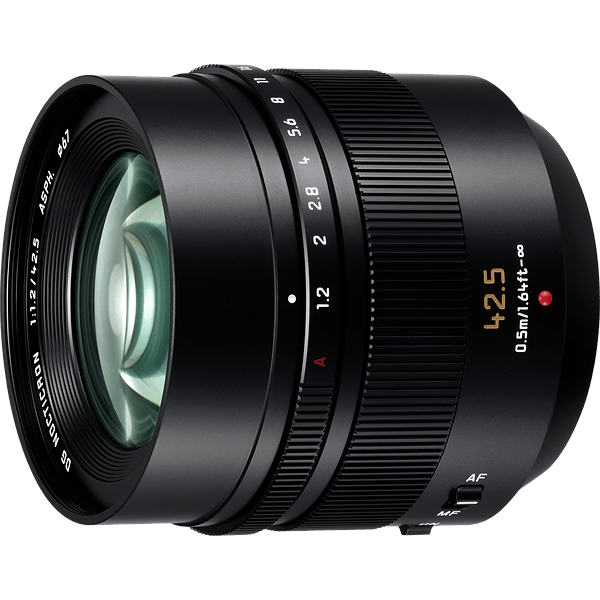
Panasonic Leica DG Nocticron 42.5mm f/1.2
Widely regarded as one of the finest M43 lenses ever made. An 85mm equivalent at f/1.2 with the strongest subject separation and most three-dimensional rendering in the system, plus Power OIS. The portrait benchmark.
- 85mm equivalent f/1.2
- Best-in-system bokeh and rendering
- Power OIS
- One of the most expensive primes
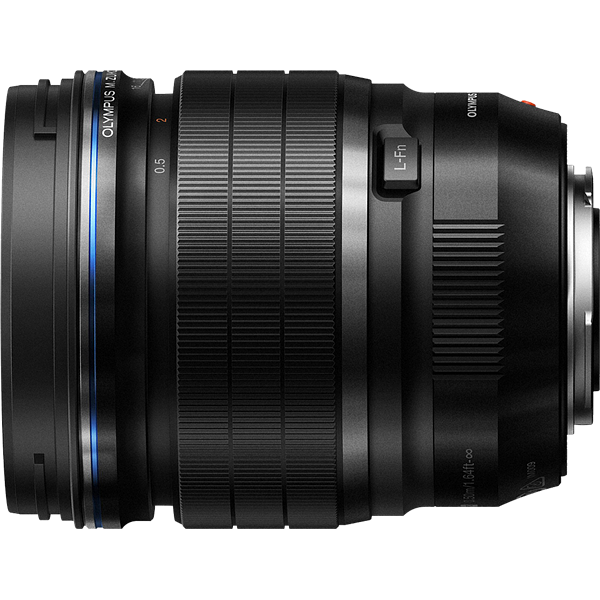
Olympus M.Zuiko Digital ED 45mm f/1.2 PRO
The premium OM portrait prime. A 90mm equivalent at f/1.2, weather sealed, with bokeh tuned specifically for portraits. The best autofocus portrait choice for OM System shooters who want sealing and PRO build.
- 90mm equivalent f/1.2
- Bokeh designed for portraits
- Weather sealed
- Expensive at $1,099
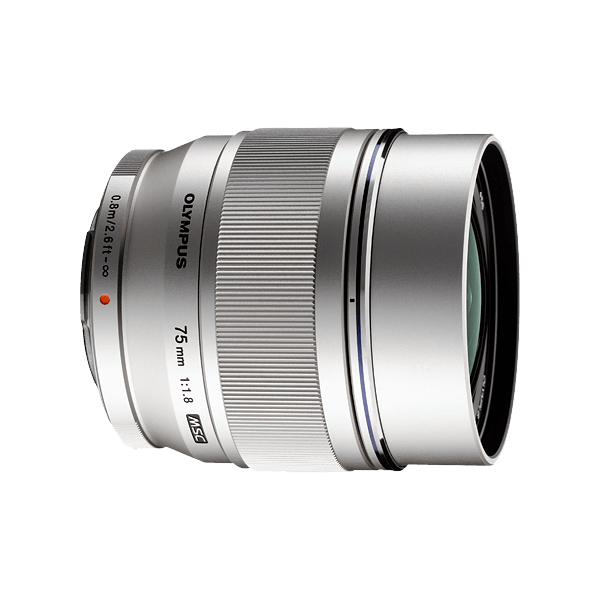
Olympus M.Zuiko Digital ED 75mm f/1.8
A cult-classic 150mm equivalent at f/1.8, prized for exceptional sharpness and beautiful compression. The choice for tighter, more dramatic portraits and the lens many consider the sharpest in the format.
- 150mm equivalent for tight portraits
- Exceptionally sharp
- Strong subject separation
- No weather sealing
- Long for indoor portraits
Sigma 56mm f/1.4 DC DN Contemporary
The best value fast portrait prime. A 112mm equivalent at f/1.4 for around $479, sharp and well built, undercutting first-party options by a wide margin. The smart-money tight portrait lens.
- 112mm equivalent f/1.4
- Excellent value at $479
- Sharp and well built
- No weather sealing
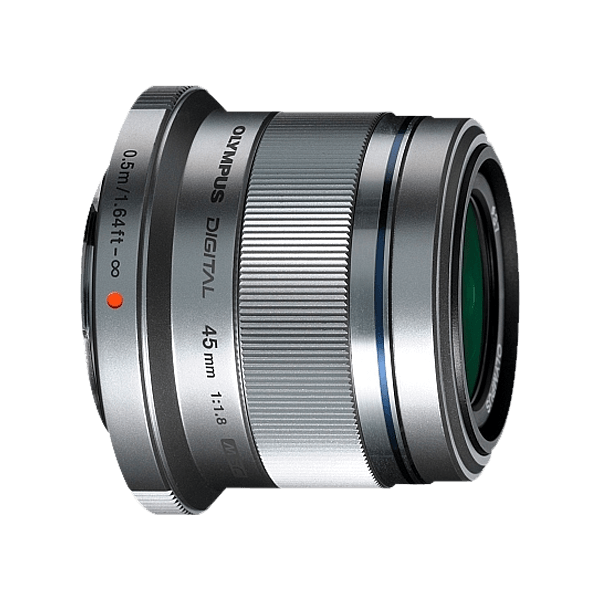
Olympus M.Zuiko Digital 45mm f/1.8
The best budget portrait lens, full stop. A 90mm equivalent that is tiny, light, sharp, and just $299. It delivers most of the subject separation of the premium options at a fraction of the price and weight.
- Outstanding value at $299
- Sharp 90mm equivalent
- Tiny and light at 116g
- No weather sealing
- Plasticky build
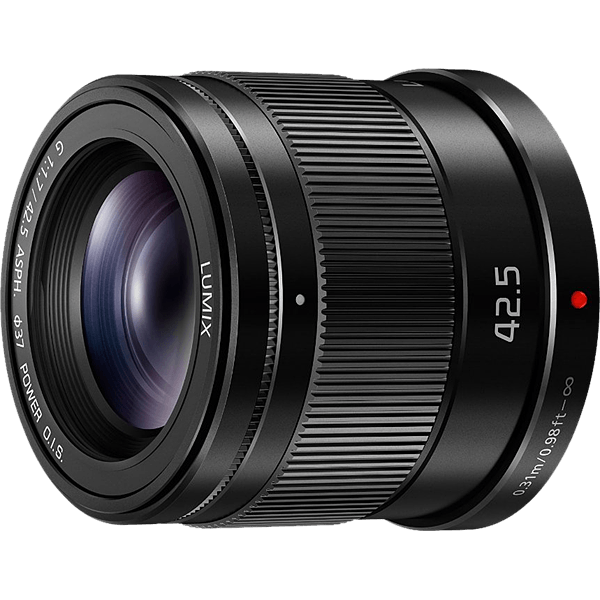
Panasonic Lumix G 42.5mm f/1.7 ASPH Power OIS
A compact 85mm equivalent at f/1.7 with OIS for around $297. A lightweight, affordable alternative to the Nocticron that keeps the same focal length and adds stabilisation, ideal for travel portraits.
- 85mm equivalent with OIS
- Compact and affordable at $297
- Lightweight at 130g
- Slower and softer than the Nocticron
Frequently Asked Questions
What full-frame equivalent focal length is recommended for portraits on M43?
Portrait photographers on M43 typically use lenses in the 75-135mm full-frame equivalent range, which corresponds to native focal lengths of approximately 37-68mm. This range provides flattering perspective compression, a comfortable working distance between photographer and subject, and sufficient background separation at wide apertures. The 42.5mm and 45mm native M43 primes, which give 85mm and 90mm full-frame equivalents, are among the most commonly used portrait focal lengths on the system.
Which M43 prime lenses are designed for portrait use?
M43 prime lenses suited to portrait work include the OM System M.Zuiko 45mm f/1.8, the Panasonic Lumix G 42.5mm f/1.7 Power O.I.S., and the OM System M.Zuiko 45mm f/1.2 Pro. These lenses give an 85-90mm full-frame equivalent field of view at wide maximum apertures suited to shallow depth of field. The OM System 75mm f/1.8 gives a 150mm equivalent and is also used for portrait and subject isolation work.
How much background blur is possible with portrait lenses on M43?
Background separation on M43 is achievable but requires wider apertures than full-frame to achieve a similar depth of field. A 45mm f/1.8 M43 lens gives roughly the same depth of field as an 85mm f/3.5 on full-frame at the same framing. For stronger background separation, the 45mm f/1.2 or 75mm f/1.8 options allow shallower depth of field. Background blur on M43 with these fast primes is visible and useful, though it does not match the extreme shallow focus possible with full-frame f/1.2 lenses.