Teleconverters on Micro Four Thirds
A teleconverter sits between your camera and a compatible lens and multiplies the focal length, giving more reach without a whole new lens. On Micro Four Thirds, where reach is already a strength, a teleconverter pushes a telephoto setup into extreme territory. This guide covers how they work, what they cost you in light and sharpness, and which lenses accept them.
What a teleconverter does
A teleconverter is a small optical unit that mounts between the camera body and a compatible lens. It magnifies the image the lens projects, multiplying the effective focal length. A 1.4x teleconverter turns a 300mm lens into 420mm; a 2x turns it into 600mm. On Micro Four Thirds that reach is then doubled again in full-frame terms by the 2x crop factor, so a 300mm lens with a 2x teleconverter reaches the field of view of a 1200mm lens on full frame.
That is the appeal. For birds, wildlife, and the Moon, M43 already gives more reach per gram than any larger format, and a teleconverter extends it further for a fraction of the cost and weight of a longer lens.
The trade-off: light and sharpness
A teleconverter is not free reach. Magnifying the image spreads the same light over a larger area, so you lose aperture. A 1.4x costs one stop of light; a 2x costs two stops. A 300mm f/4 lens becomes a 420mm f/5.6 with a 1.4x, or a 600mm f/8 with a 2x. Less light means the autofocus system has less to work with and you need a higher ISO or slower shutter speed, which matters for moving subjects in poor light.
There is also a small sharpness cost. A teleconverter adds glass to the optical path, so the combination is rarely quite as sharp as the bare lens, and any softness in the original lens is magnified too. In practice the better PRO telephotos hold up very well with a 1.4x, and acceptably with a 2x, while cheaper lenses show the loss more clearly. The general rule is that a 1.4x is close to a free lunch on a good lens, and a 2x is a more noticeable compromise you accept when you need the reach.
The Teleconverter Calculator works out the exact new focal length, full-frame equivalent, aperture, and light loss for any lens and teleconverter combination, so you can see the trade before you buy.
1.4x or 2x: which to choose
- Choose the 1.4x if you want extra reach with the least cost to image quality and autofocus. It loses only one stop and stays sharp on good lenses. It is the safer everyday choice.
- Choose the 2x when reach is the priority and you have the light for it. The two-stop loss and the sharpness hit are real, but for a distant bird in good daylight the extra magnification can be the difference between a usable frame and an empty one.
- Consider neither if your lens is already slow. Putting a 2x on an f/6.3 zoom gives f/13, which is dark enough that autofocus and diffraction both become limiting on M43.
Compatibility is limited and specific
Teleconverters only fit a small set of lenses. The rear element of the lens has to physically clear the teleconverter's protruding front element, and the electronics have to be designed to pass through, so most lenses simply will not accept one. Compatibility is also brand-specific: OM System teleconverters fit OM System and Olympus PRO telephotos, and Panasonic teleconverters fit a few Panasonic Leica telephotos. They do not cross between brands.
The OM System teleconverters: MC-14 and MC-20
The MC-14 is a 1.4x that loses one stop, and the MC-20 is a 2x that loses two stops. Both fit the same set of OM System and Olympus PRO telephotos and macro lenses, including the 40-150mm f/2.8 PRO, the 300mm f/4 IS PRO, the 150-400mm f/4.5 TC1.25x IS PRO, the 90mm f/3.5 Macro IS PRO, and the 100-400mm and 150-600mm zooms. The 300mm f/4 with the MC-20 is a popular birding combination, reaching 600mm (1200mm equivalent) at f/8.
The Panasonic teleconverters: DMW-TC14 and DMW-TC20
Panasonic's DMW-TC14 (1.4x, one stop) and DMW-TC20 (2x, two stops) fit a short list of Panasonic Leica telephotos: the Leica 200mm f/2.8, the Leica 50-200mm f/2.8-4, and the Leica 100-400mm f/4-6.3 II. The 200mm f/2.8 with the DMW-TC14 makes a 280mm f/4 (560mm equivalent), a strong wildlife and sports combination that keeps a usable aperture.
Before buying, confirm your exact lens is on the compatible list for that teleconverter, because even within a brand most lenses are not supported. If your telephoto is on the list, a 1.4x is one of the most cost-effective ways to add reach to a Micro Four Thirds kit.
Lenses that accept a teleconverter
Teleconverters only fit a limited set of telephoto and macro lenses, and never across brands. These are the main OM System and Panasonic lenses that accept one. Confirm your exact lens is on the compatible list for the specific teleconverter before buying, because most lenses in each system are not supported.
The OM System 300mm f/4 IS PRO and 40-150mm f/2.8 PRO are the most popular hosts for the MC-14 and MC-20, and the 90mm f/3.5 Macro PRO accepts them too for extra working distance in macro. On the Panasonic side the Leica 200mm f/2.8 and 100-400mm zoom take the DMW-TC14 and DMW-TC20.
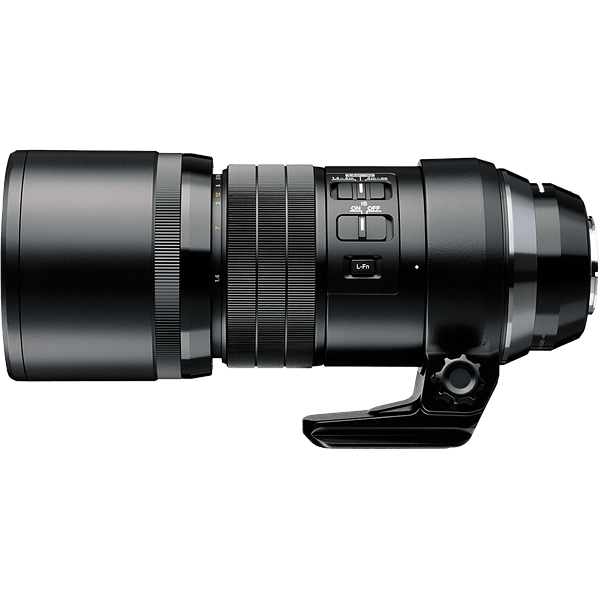
Olympus M.Zuiko ED 300mm f/4 IS PRO
600mm equiv · 1270g · OIS · Weather sealed
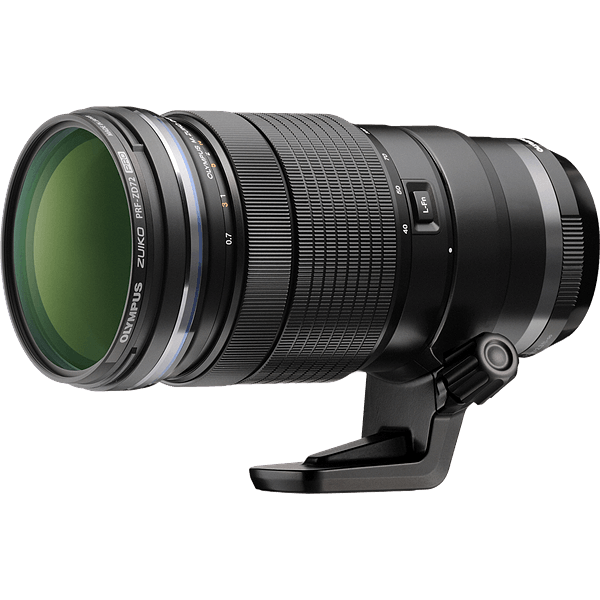
Olympus M.Zuiko ED 40-150mm f/2.8 PRO
80–300mm equiv · 880g · Weather sealed
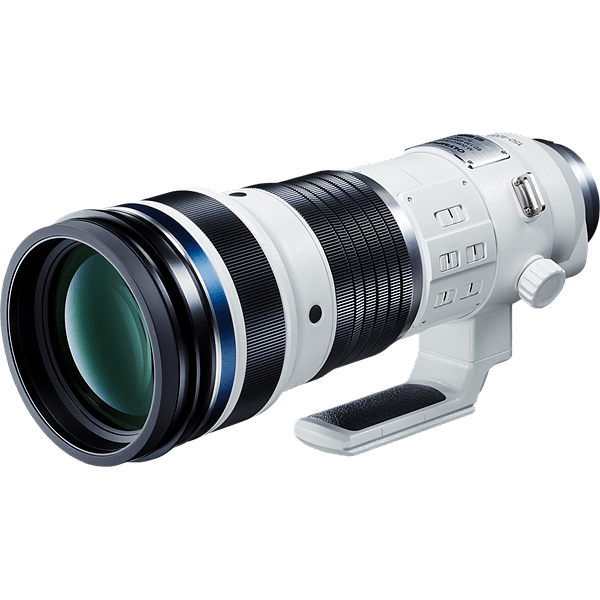
Olympus 150-400mm f/4.5 TC1.25x IS PRO
300–800mm equiv · 3575g · OIS · Weather sealed
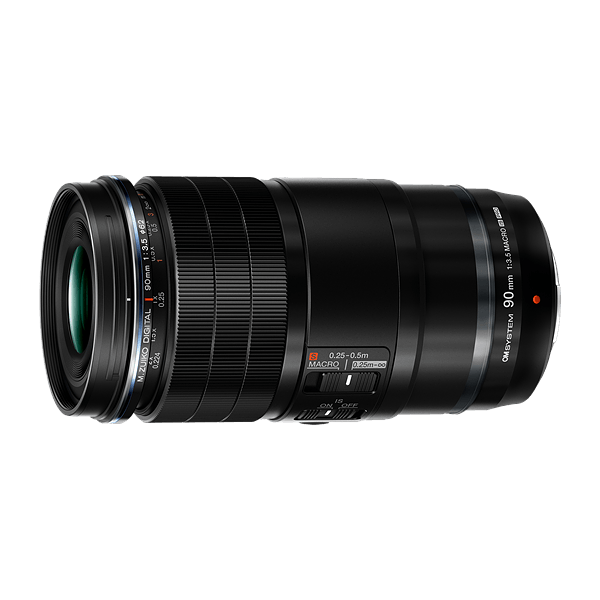
Olympus M.Zuiko Digital ED 90mm f/3.5 Macro IS PRO
180mm equiv · 453g · OIS · Weather sealed
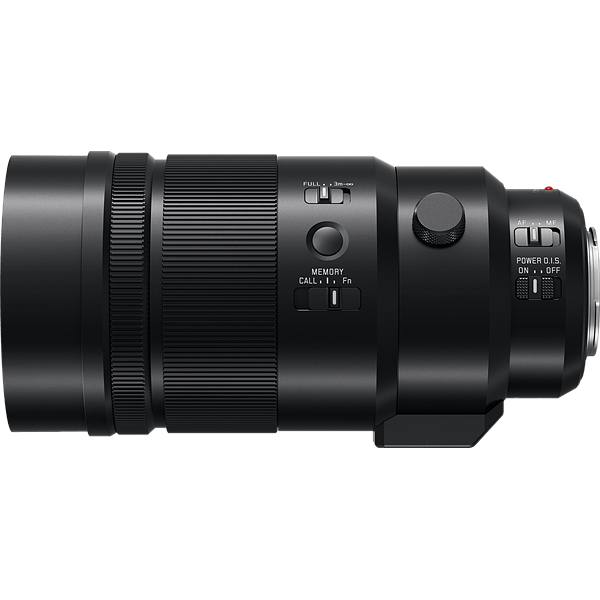
Leica DG Elmarit 200mm f/2.8 Power OIS
400mm equiv · 1615g · OIS · Weather sealed
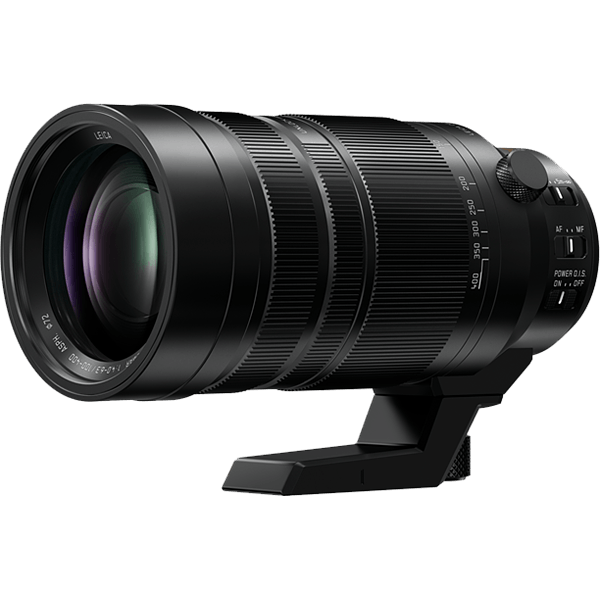
Panasonic Leica DG Vario-Elmar 100-400mm f/4-6.3 II
200–800mm equiv · 985g · OIS · Weather sealed