Micro Four Thirds for Macro Photography
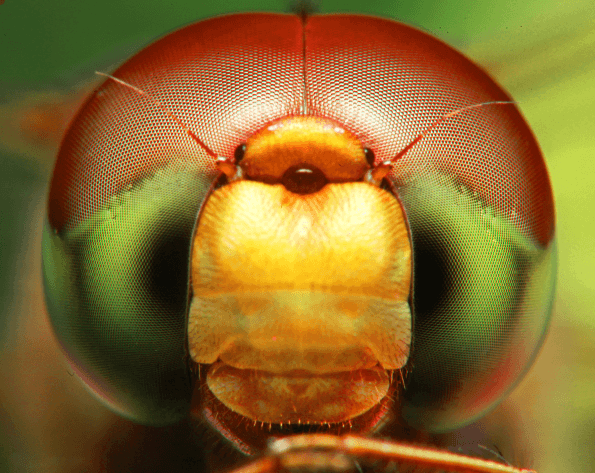
M43 has five dedicated macro lenses covering 30mm to 90mm and a strong focus stacking implementation on OM System bodies. The smaller sensor gives more depth of field at equivalent magnification, which helps with the razor-thin focus planes typical of close-up work.
What macro photography means on M43
A true macro lens reproduces a subject at 1:1 magnification on the sensor - the subject appears on the sensor at the same size as in real life. On a 17.3 x 13 mm M43 sensor, 1:1 means a subject filling the frame is approximately 17mm wide. Because the sensor is smaller than APS-C or full frame, the same 1:1 magnification ratio produces a tighter crop of the subject than on a larger sensor, which can be an advantage for very small subjects.
The crop factor also affects apparent magnification when viewing the final image. A 1:1 image from an M43 camera appears more magnified than a 1:1 image from a full-frame camera when displayed at the same output size, because the smaller sensor captures a narrower field of view at the same physical magnification.
Working distance
Working distance is the physical space between the front of the lens and the subject at maximum magnification. It matters because a short working distance can cause the lens to cast a shadow on the subject, startle live subjects, or make it difficult to position lighting.
Longer focal length macro lenses give more working distance at 1:1. The Olympus 60mm f/2.8 Macro has around 190mm of working distance at 1:1. The OM System 90mm f/3.5 Macro IS Pro extends this further, giving more room between the lens and subject at maximum magnification. The 30mm options from Olympus and Panasonic have much shorter working distances and suit product and still-life subjects more than live insects or small animals.
Depth of field in macro shooting
Depth of field becomes extremely thin at close focus distances. At 1:1 magnification, even stopped down to f/11, the zone of acceptable sharpness can be less than a millimetre deep. This is true across all camera systems at true macro magnification, but the M43 sensor's smaller size does give slightly more depth of field at equivalent magnification compared to a full-frame sensor at the same f-number.
In practice, getting an entire insect or flower in sharp focus at 1:1 often requires either stopping down significantly, which introduces diffraction, or using focus stacking.
Focus stacking on M43
Focus stacking combines multiple exposures taken at slightly different focus distances, with software merging the sharp regions of each frame into a single fully sharp image. It is the standard technique for macro photography where depth of field is insufficient for a single shot.
OM System bodies have a strong built-in focus bracketing implementation. The camera automatically takes a sequence of shots with incrementally shifted focus and can merge them in-camera or export the sequence for stacking in software such as Helicon Focus or Zerene Stacker. The number of frames, step size, and interval are all configurable. This is one of the areas where OM System cameras have a practical advantage over Panasonic for macro work.
Macro lens options for M43
30mm options
The Olympus 30mm f/3.5 Macro and the Panasonic Macro 30mm f/2.8 both give 1:1 magnification at very short working distances. The 30mm focal length is best suited to still-life, product, and food photography where you can control the setup and lighting. The short working distance makes it difficult to use for live insects or subjects that react to close approach.
45mm option
The Panasonic Macro Elmarit 45mm f/2.8 gives 1:1 magnification with a moderate working distance. It is weather sealed and doubles as a short portrait prime. The f/2.8 maximum aperture is useful for available-light macro work. It autofocuses across the full magnification range on compatible bodies.
60mm option
The Olympus 60mm f/2.8 Macro gives 1:1 magnification at around 190mm working distance. It is the most versatile all-round macro choice in the M43 lineup: enough working distance for live insects, a useful f/2.8 aperture for available light, and a focal length that works as a short portrait lens. It is not weather sealed.
90mm option
The OM System 90mm f/3.5 Macro IS Pro is the flagship M43 macro lens. It reaches 2:1 magnification, meaning the subject appears on the sensor at twice its actual size, which is double the maximum magnification of most macro lenses. It includes in-lens stabilisation that coordinates with OM System body IBIS. It is fully weather sealed. At 90mm, working distance at 1:1 is generous enough for field use with live subjects. It is the most capable macro option in the M43 system.
Lighting for M43 macro
At macro distances and narrow apertures, available light is rarely sufficient. A ring flash mounts around the front of the lens and provides even, shadow-free illumination close to the subject. Twin flash systems give more control over the direction and ratio of light. Both OM System and Panasonic offer dedicated macro flash systems compatible with their M43 bodies.
Who M43 suits for macro
- Nature photographers shooting insects, spiders, and small flora in the field
- Product and food photographers shooting in a controlled studio setup
- Anyone who wants in-camera focus stacking without third-party software
- Photographers who already own an M43 system and want to add macro capability without switching formats
Micro Four Thirds cameras for macro photography
For macro photography, the camera body matters less than the lens, but a few M43 bodies stand out for close-up work. The most important features are a reliable focus stacking implementation, strong IBIS for handheld shooting at close distances, and a good live view magnification system for precise manual focus.
OM System bodies lead in this area. The OM-1 Mark II has the most advanced focus bracketing in the M43 system: configurable frame count, step size, and interval, with optional in-camera merging via the Computational Photography menu. The OM-5 II brings the same focus bracketing to a smaller, lighter body that is also fully weather sealed, which matters when shooting in the field among plants and insects. The OM-D E-M5 III is an older but capable option if you already own one and do not need the latest subject recognition.
Panasonic bodies can also be used for macro but lack the same built-in focus stacking tools. If you shoot mostly static subjects and merge stacks in Helicon Focus or Zerene Stacker rather than in-camera, the body choice opens up. All M43 bodies support the full range of M43 macro lenses.
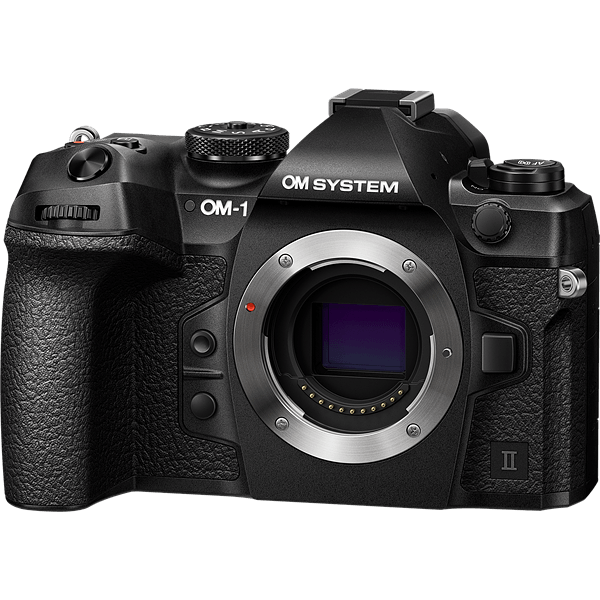
OM System OM-1 Mark II
20.4MP stacked BSI Live MOS · 8.5-stop IBIS · Weather sealed
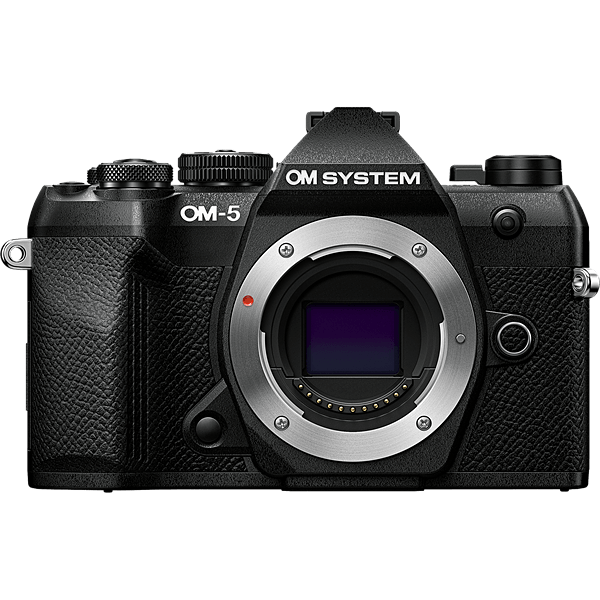
OM System OM-5 II
20.4MP Live MOS · 7-stop IBIS · Weather sealed
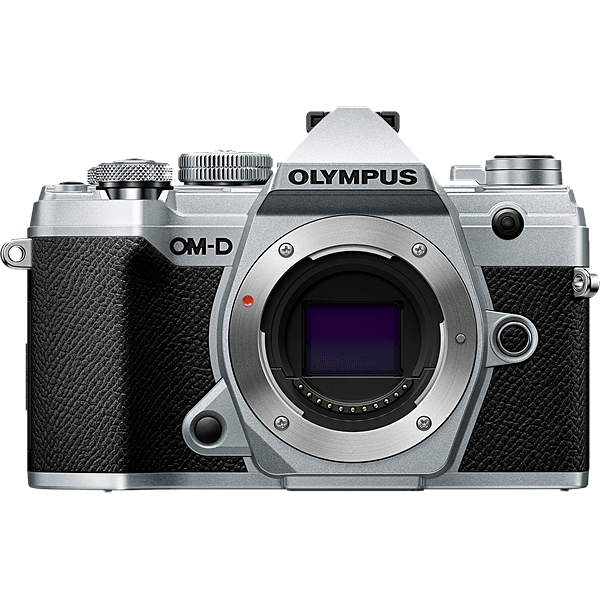
Olympus OM-D E-M5 III
20.4MP Live MOS · 6.5-stop IBIS · Weather sealed
Micro Four Thirds macro lenses
M43 has five dedicated macro lenses covering 30mm through 90mm, which gives more choice at this sensor size than most other systems. The right focal length depends on what you are shooting and how close you can get to your subject.
Shorter macro lenses are compact and inexpensive but bring the front element very close to the subject at 1:1. That makes them difficult to use with live subjects that react to close approach, and lighting becomes harder because the lens itself casts a shadow. The 30mm options from Olympus and Panasonic are best suited to controlled settings: product photography, food, dried specimens, or anything that stays still.
The 60mm focal length is the most versatile all-round option. It gives enough working distance for most live insects in the field, a useful f/2.8 aperture for available light, and a weight that makes handheld shooting practical. It is the lens most M43 macro shooters reach for first.
At 90mm, the OM System 90mm f/3.5 Macro IS Pro sits at the top of the range. It reaches 2:1 magnification, double the 1:1 maximum of all the other options. The built-in OIS coordinates with OM System body IBIS for combined stabilisation. The longer focal length means more working distance at 1:1, which is a real advantage when shooting insects or small animals that will not tolerate the front element close to them. It is the most capable macro lens in the M43 system at a matching price.
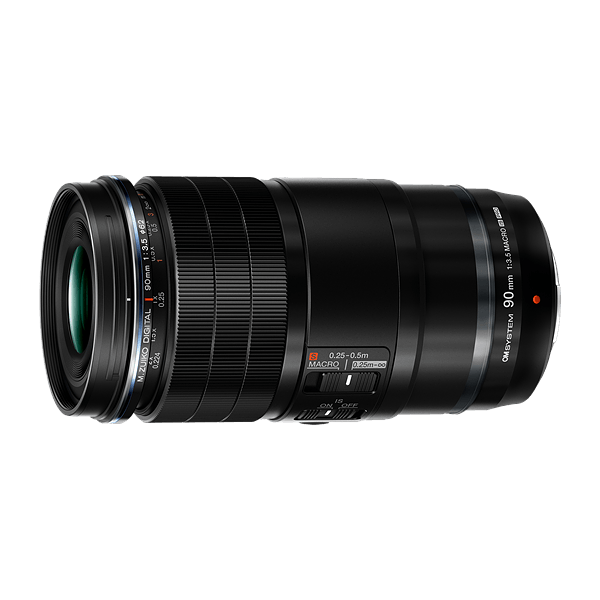
Olympus M.Zuiko Digital ED 90mm f/3.5 Macro IS PRO
180mm equiv · 453g · OIS · Weather sealed
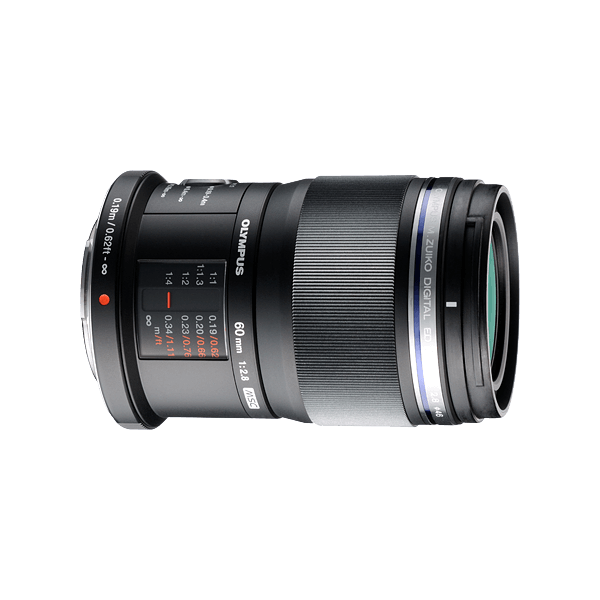
Olympus M.Zuiko Digital ED 60mm f/2.8 Macro
120mm equiv · 185g
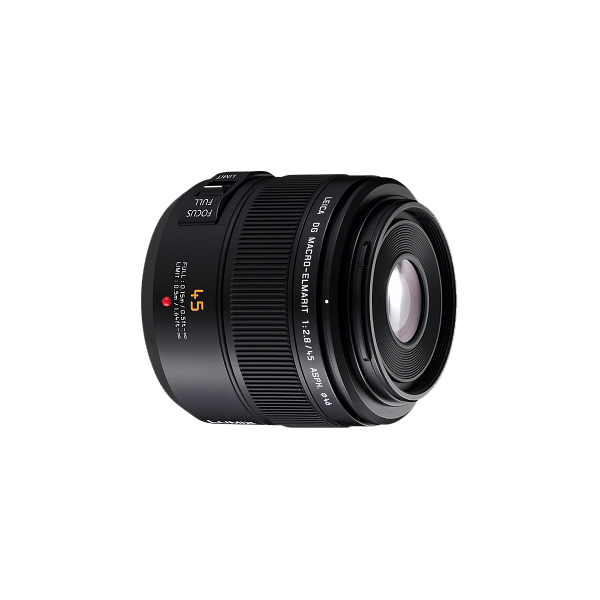
Panasonic Leica DG Macro-Elmarit 45mm f/2.8
90mm equiv · 225g · OIS
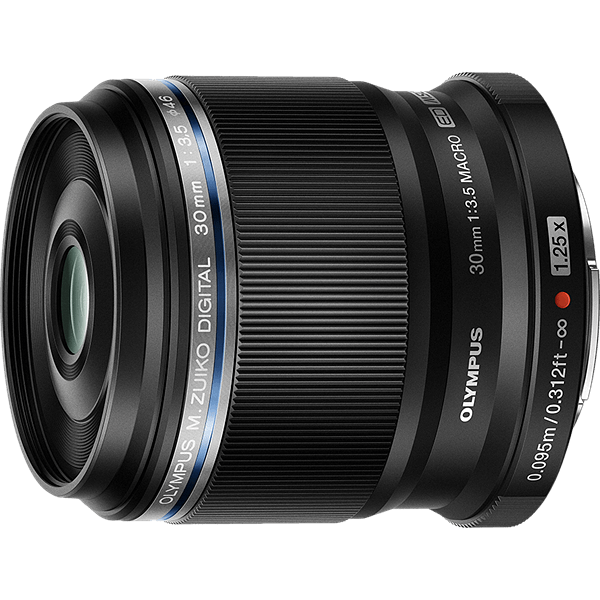
Olympus M.ZUIKO Digital ED 30mm f/3.5 Macro
60mm equiv · 128g
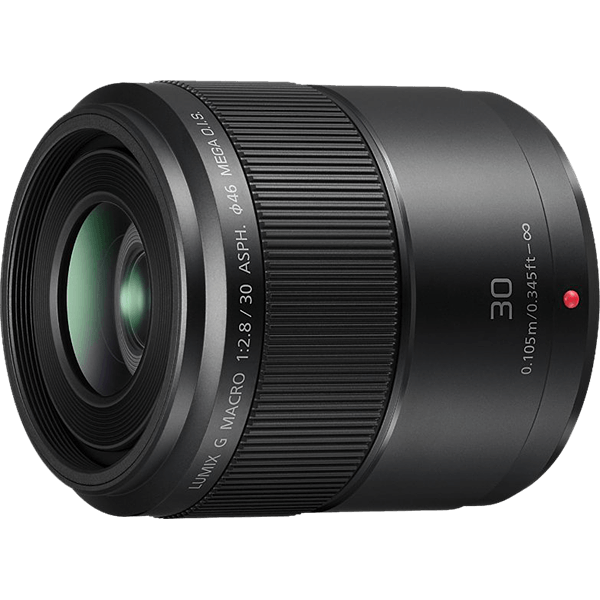
Panasonic Lumix G Macro 30mm f/2.8 ASPH Mega OIS
60mm equiv · 195g · OIS
Macro flashes
At macro distances and small apertures, ambient light is almost never sufficient. The subject is close, the depth of field is thin, and any camera movement during a long exposure will ruin the shot. Dedicated macro flashes solve this by mounting directly on or near the front of the lens and providing a burst of light at the moment of exposure, making shutter speed irrelevant to motion blur and allowing you to stop down as far as needed for depth of field.
Ring flashes encircle the lens with a continuous tube of light. They produce even, shadow-free illumination that works well for technical and scientific macro work where consistent rendering matters more than creative lighting. Twin flash systems use two separate heads that can be positioned and angled independently, which gives more control over shadow direction and contrast.
The Olympus STF-8 is a twin flash system with two small heads that clip to the front of the lens. It supports TTL on OM System and Olympus bodies, making exposure straightforward. The Panasonic DMW-FL360L is a conventional on-camera flash that can be used for macro with a diffuser or bracket, and its guide number of 36 gives more power than purpose-built macro flashes. The Godox MF12 is a compact single-head macro flash that uses the Godox X wireless system, so you can combine two or more heads for multi-light setups on any compatible M43 body with a Godox trigger.
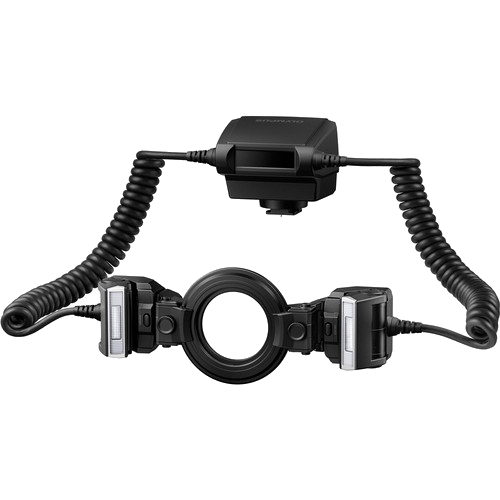
Olympus STF-8
Twin macro flash for close-up photography. Two independently controllable flash heads attach around the lens for even, shadow-free illumination of small subjects.
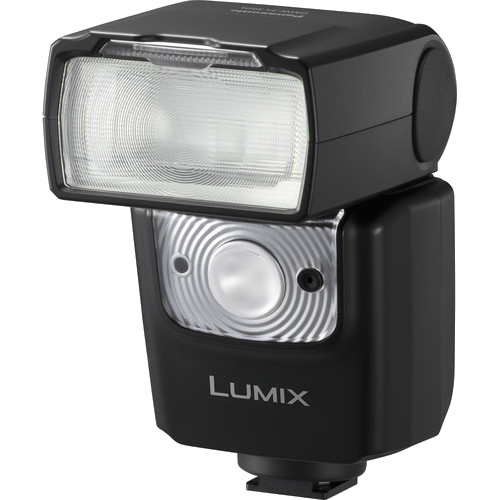
Panasonic DMW-FL360L
Mid-range Panasonic flash with guide number 36 and full i-TTL support. A reliable on-camera option for Lumix shooters.
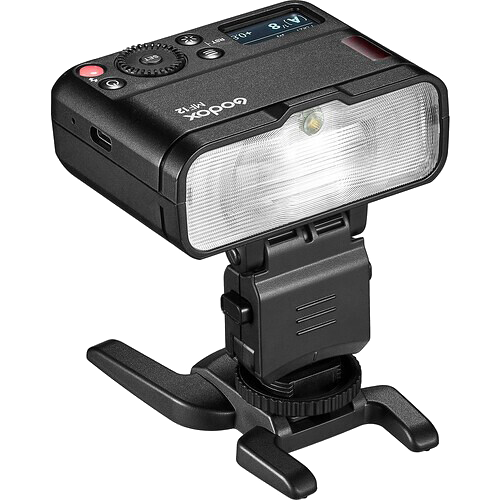
Godox MF12
Compact macro flash with a built-in lithium battery and 2.4GHz wireless control. Mounts on the lens for close-up work and can be combined with several units for multi-light macro setups. TTL and manual on Olympus and Panasonic via a Godox X trigger.
Diffusers
A diffuser fits over the front of a macro lens and softens light from an on-camera flash or ring flash. Without a diffuser, small light sources produce hard shadows and specular highlights that can obscure surface texture at close distances. Diffusers spread the light over a larger area relative to the subject, producing softer gradients and less contrast in the highlights.
For macro work, diffusers tend to be lens-specific or at least lens-diameter-specific because they need to fit close to the subject and align with the optical axis. A diffuser designed for the OM System 90mm f/3.5 Macro IS Pro will not necessarily fit the 60mm or 45mm lenses. The two options listed here are purpose-built for M43 macro lenses and are compatible with the flashes above.
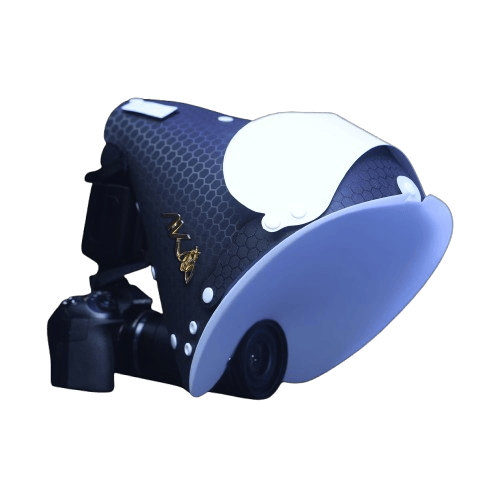
AK OM-90 Pro
Custom-fit diffuser built specifically for the OM System 90mm f/3.5 Macro IS PRO. Made in Florida. Compatible with Godox V860/V1/TT685 series and the Olympus FL-900R. Price varies by flash model ($117–$135).
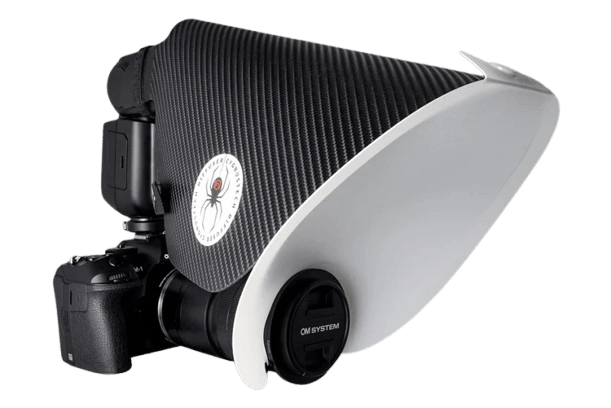
Cygnustech Diffuser
Handmade in Cairns, Australia. Custom-built per order to fit your specific lens and flash combination. Waterproof construction, lightweight frame. Seven years of development.