Micro Four Thirds for Bird and Wildlife Photography
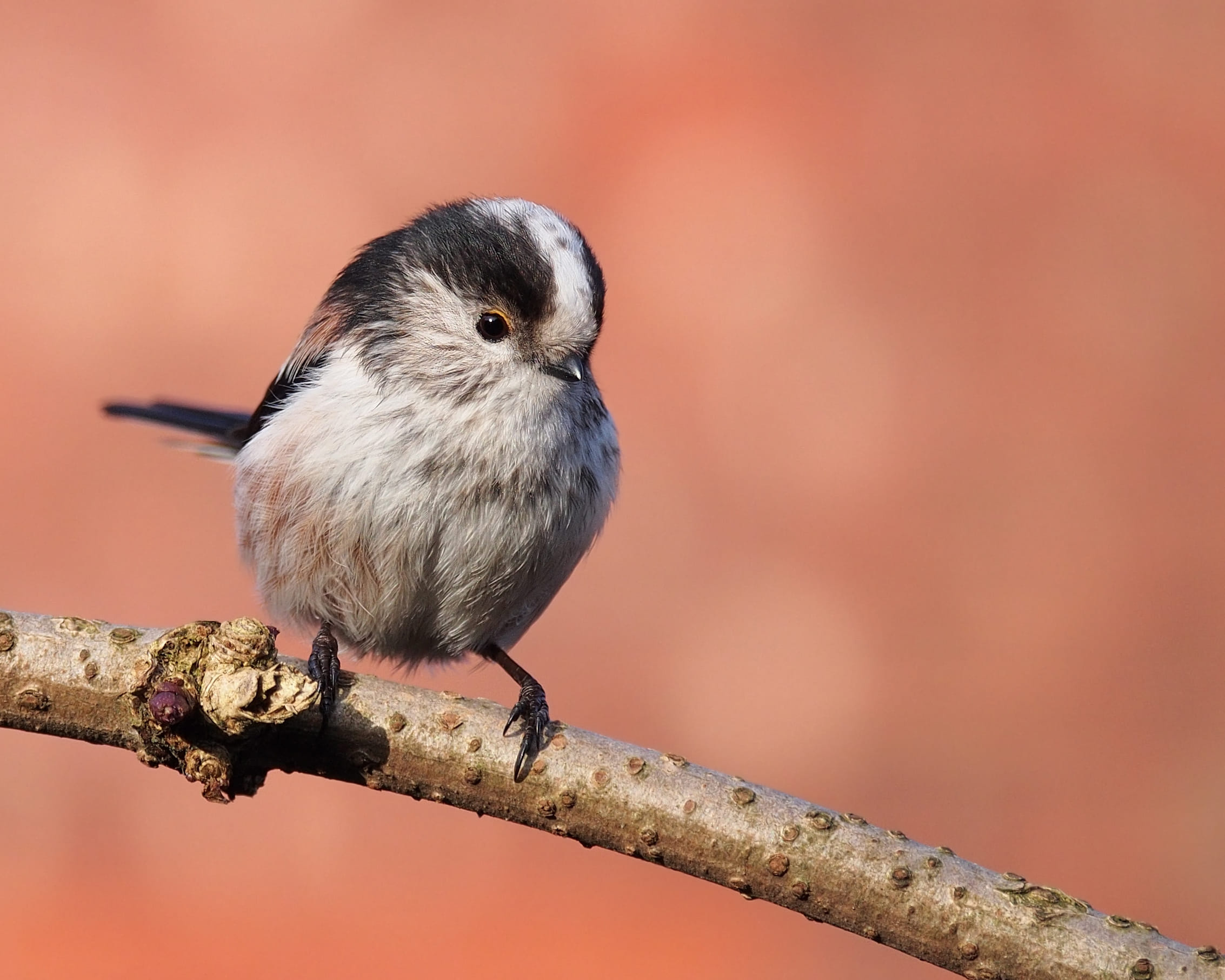
M43's 2x crop factor gives you 600mm equivalent reach from a 300mm lens. Paired with subject-tracking AF and compact telephoto glass, it is one of the most practical systems for bird and wildlife photography without the weight and cost of full-frame telephoto rigs.
Why M43 works for birding
Birding punishes a camera. You need autofocus that grabs a small, fast subject, frame rates that catch the instant of take-off, and enough reach to fill the frame from a distance. Micro Four Thirds answers the reach problem better than any other system for the money.
The 2x crop factor is the whole story. A 300mm lens gives the field of view of a 600mm full-frame lens, and a 100-400mm zoom covers 200-800mm equivalent, in a kit light enough to hand-hold all day without a gimbal. That same reach on a full-frame body means heavier, far more expensive glass and often a tripod.
The honest limit is light. Smaller sensors gather less of it, so deep shade and the edges of dawn and dusk are where larger formats still pull ahead on noise. For daylight perched and in-flight work, modern OM System and Panasonic bodies with on-sensor phase-detection AF and bird subject recognition are genuinely competitive.
Why reach matters for wildlife photography
Most wildlife subjects cannot be approached closely. Birds in flight, mammals in open terrain, and shy species in dense cover all require working at a distance. The longer your effective focal length, the more of the frame your subject fills from that distance. In wildlife photography, reach is not a luxury - it is the difference between a usable shot and a missed one.
This is where the M43 format has a structural advantage over larger sensors. Because the sensor is smaller, it captures a narrower angle of view from the same lens. The 2x crop factor means every lens delivers double the effective reach of its focal length. A 300mm lens on M43 frames the scene like a 600mm lens on full frame. A 400mm lens gives 800mm equivalent.
The reach advantage in practice
To get 600mm equivalent reach on a full-frame camera, you need a 600mm lens. These lenses are large, heavy, and expensive. A full-frame 600mm f/4 prime weighs around 3 kg and costs well above $10,000. The M43 equivalent is a 300mm lens. The OM System 300mm f/4 IS Pro weighs 1.48 kg and costs a fraction of the full-frame alternative.
The 150-400mm f/4.5 TC1.25x IS Pro takes this further. It covers 300-800mm equivalent and extends to 1000mm equivalent with its built-in 1.25x teleconverter. A comparable full-frame zoom would be physically enormous. The M43 version is heavy by M43 standards but manageable for hand-held shooting.
Zoom lenses show the same pattern. The Panasonic 100-400mm and OM System 100-400mm give 200-800mm equivalent range. The OM System 150-600mm gives 300-1200mm equivalent. These are focal length ranges that simply do not exist at practical size and weight in other formats.
What to look for in an M43 wildlife body
Reach gets you to the subject. The body determines whether you capture it sharply. For wildlife, three body features matter most.
Phase-detect autofocus with subject tracking
Older M43 cameras used contrast-detect AF only, which is too slow for moving subjects. Current wildlife-capable M43 bodies all include on-sensor phase-detection AF with AI-based subject recognition for birds and animals. OM System bodies are particularly strong here, with bird detection that works reliably even in cluttered backgrounds. The G9 II and GH7 from Panasonic also include animal and bird recognition. See the full list of M43 cameras with phase-detect AF.
High burst rate
Wildlife moments are brief. A high burst rate increases the number of frames you capture during a peak moment. The OM System OM-1 Mark II shoots at up to 120 fps with the electronic shutter in pre-capture mode, which begins buffering frames before you fully press the shutter. The OM-1, OM-3, and G9 II all offer competitive burst speeds for wildlife use.
Weather sealing
Wildlife shooting happens outdoors, often in rain, dust, and humidity. Weather-sealed bodies from OM System and Panasonic handle these conditions without issue. Pairing a sealed body with a sealed lens gives you a fully protected kit you can use in poor weather without hesitation.
Telephoto lens options for M43 wildlife
Budget and versatile zooms
The Panasonic 100-300mm f/4-5.6 II and the Olympus 75-300mm f/4.8-6.7 II cover 200-600mm equivalent at accessible prices. Autofocus on these lenses is adequate for slower subjects and perched birds. For fast action and birds in flight, the slower maximum aperture and less sophisticated AF motors are a limitation.
Mid-range zoom options
The Panasonic 100-400mm f/4-6.3 II and OM System 100-400mm f/5-6.3 IS cover 200-800mm equivalent. Both are weather sealed and significantly faster to focus than the budget zooms. The OM System version includes in-lens stabilisation that coordinates with OM System bodies. These are the most practical all-round wildlife zoom choices in the M43 system.
Professional options
The OM System 150-600mm f/5-6.3 IS covers 300-1200mm equivalent and is the longest native M43 zoom available. The OM System 300mm f/4 IS Pro is a weather-sealed prime with a bright maximum aperture for a telephoto of this reach. The 150-400mm f/4.5 TC1.25x IS Pro combines a fast zoom range with a built-in teleconverter. These lenses are priced for serious use and deliver corresponding optical and AF performance.
The trade-offs to be aware of
The reach advantage comes with trade-offs relative to full-frame. The smaller sensor produces more depth of field at equivalent settings, which is generally a benefit for wildlife, but also generates more noise at high ISO. In low light - dawn, dusk, overcast forest conditions - full-frame sensors have a clear advantage. At base ISO in good light, the difference is much smaller.
Subject tracking on the best current M43 bodies is very good but not yet at the level of Sony's top full-frame bodies for the most unpredictable subjects. For most wildlife shooting situations it is more than adequate. For high-speed sports-level action tracking it is not the benchmark.
Who M43 suits for bird and wildlife photography
- Bird photographers who want 600mm+ equivalent reach without a large tripod setup
- Photographers who hike or travel to shooting locations and need to carry their kit long distances
- Anyone coming from a full-frame system who wants better reach for the same money
- Wildlife photographers who shoot in varied conditions and need reliable weather sealing across the system
Micro Four Thirds cameras for bird and wildlife photography
For bird and wildlife photography, the camera's autofocus system, burst speed, and subject tracking matter more than megapixel count. Birds in flight, perched birds with obstructions in front, and fast-moving mammals all test a camera's ability to acquire a subject quickly, maintain lock through erratic movement, and keep firing at high frame rates without slowing down.
OM System bodies dominate this list because of their subject recognition and burst performance. The OM-1 Mark II has a stacked BSI sensor and a quad-core TruePic X processor that enables up to 120 fps electronic shutter with pre-capture. Its bird and animal subject recognition tracks through branches, reeds, and other obstructions that would cause phase detect systems on other brands to hunt. The OM-1 (first generation) shares the same sensor and delivers similar tracking performance at a lower price. Both are fully weather sealed to IP53.
The OM-3 is a lighter alternative at 414g, still weather sealed, with 20.4MP stacked BSI performance and the same bird and animal recognition. It is the most compact serious birding option in the M43 system.
On the Panasonic side, the G9 II and GH7 both introduced phase detect autofocus, which Panasonic bodies had lacked for years. Both include bird and animal subject recognition, 25.2MP resolution, and Dual IS support with compatible lenses. The G9 II is the more capable stills camera; the GH7 adds higher video specs including internal ProRes recording.
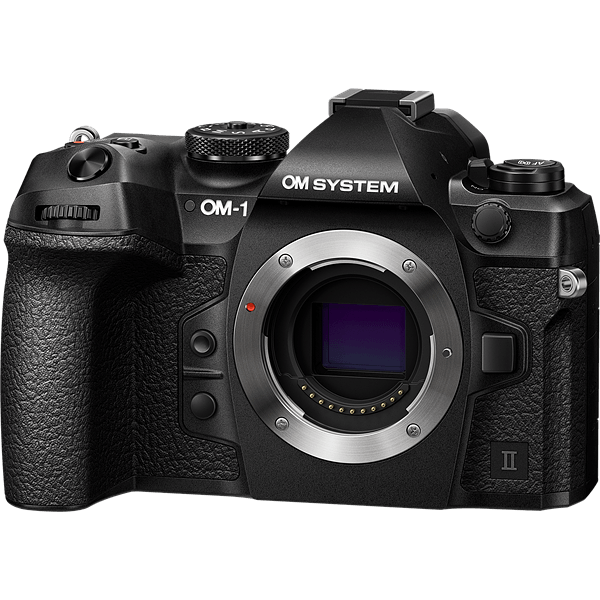
OM System OM-1 Mark II
20.4MP stacked BSI Live MOS · 8.5-stop IBIS · Weather sealed
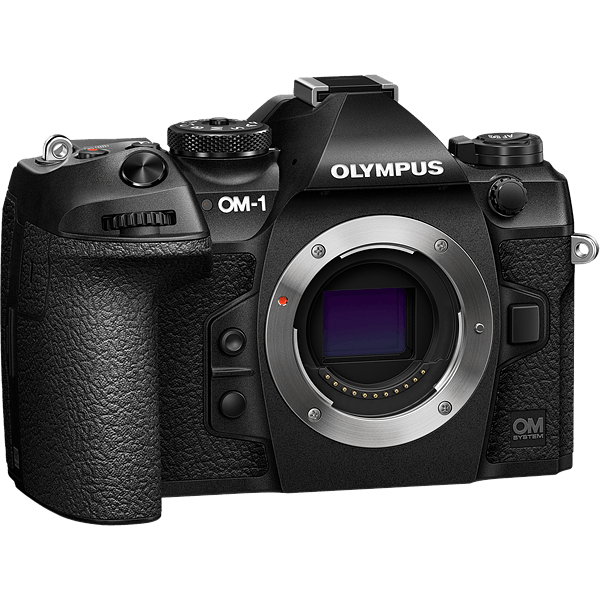
OM System OM-1
20.4MP stacked BSI Live MOS · 8-stop IBIS · Weather sealed
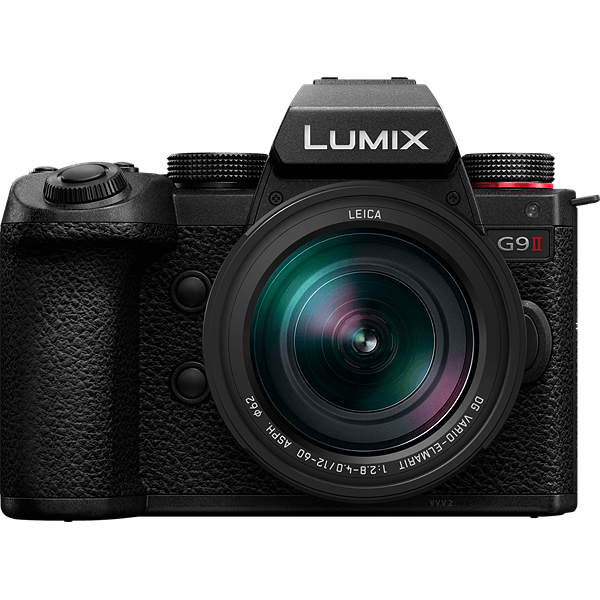
Panasonic Lumix G9 II
25.2MP Live MOS · 7.5-stop IBIS · Weather sealed
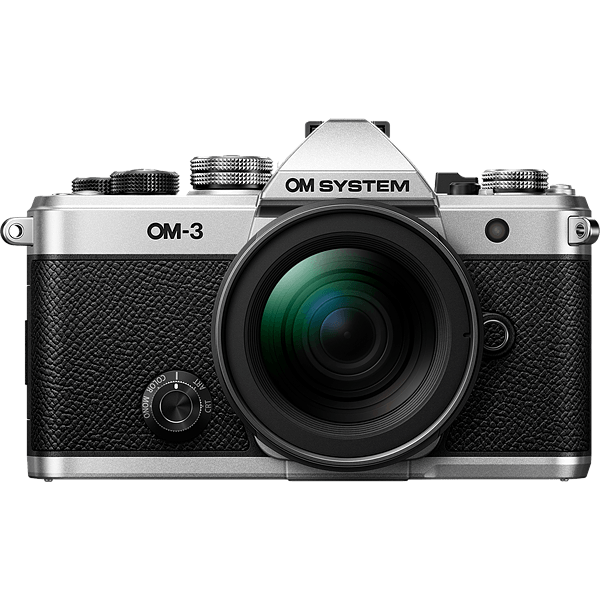
OM System OM-3
20.4MP stacked BSI Live MOS · 7-stop IBIS · Weather sealed
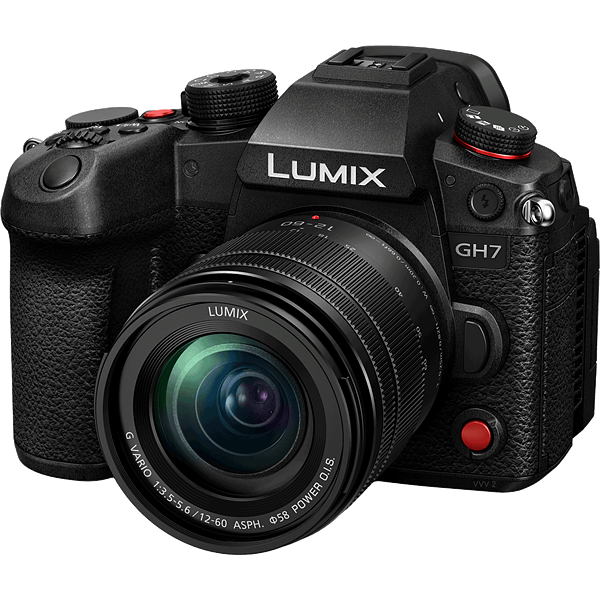
Panasonic Lumix GH7
25.2MP Live MOS · 7.5-stop IBIS · Weather sealed
Micro Four Thirds telephoto lenses for birding and wildlife
The 2x crop factor of M43 is the format's biggest practical advantage for telephoto work. A 300mm f/4 lens gives 600mm equivalent reach. A 400mm zoom reaches 800mm equivalent. This lets you use shorter, lighter, and less expensive glass to achieve the same field of view you would need a much larger lens for on full frame.
The Olympus 300mm f/4 IS PRO is the benchmark prime for birding on M43. At 600mm equivalent, it is sharp, weather sealed, and stabilised, and it pairs with the MC-14 or MC-20 teleconverter for even more reach at a modest aperture penalty. At 1270g it is a manageable handheld lens for field use.
The 150-400mm f/4.5 TC1.25x IS PRO is the system's professional zoom. It has a built-in 1.25x teleconverter that takes it to 500mm (1000mm equiv) without any glass change, and the MC-14 or MC-20 can be added on top. The trade-off is weight: 3575g makes it a tripod or monopod lens in most situations.
The 100-400mm f/5-6.3 IS and 150-600mm f/5-6.3 IS are lighter zoom options that cover a wide range without the premium price. The 100-400mm at 760g is genuinely handheld-friendly. The 150-600mm reaches 1200mm equivalent, which is extraordinary for the weight and price.
The Panasonic Leica 100-400mm f/4-6.3 II is the main Panasonic-branded telephoto zoom for this use case. At 985g it is heavier than the Olympus 100-400mm but starts at a wider f/4 at the short end and has a slightly different rendering character. It activates Dual IS on compatible Panasonic bodies.
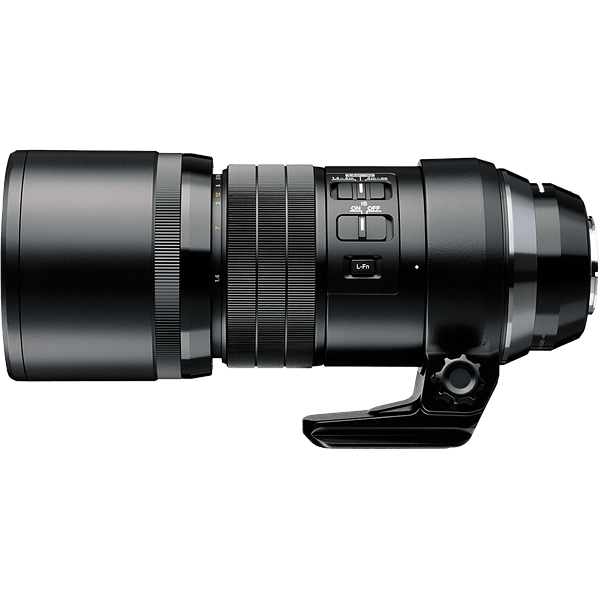
Olympus M.Zuiko ED 300mm f/4 IS PRO
600mm equiv · 1270g · OIS · Weather sealed
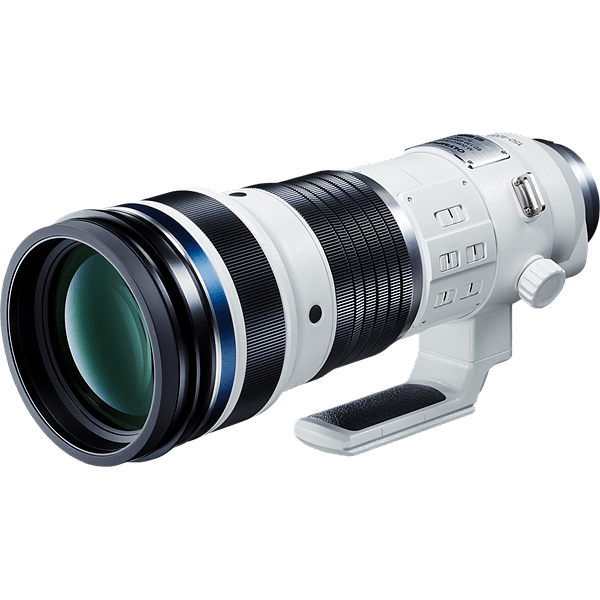
Olympus 150-400mm f/4.5 TC1.25x IS PRO
300–800mm equiv · 3575g · OIS · Weather sealed
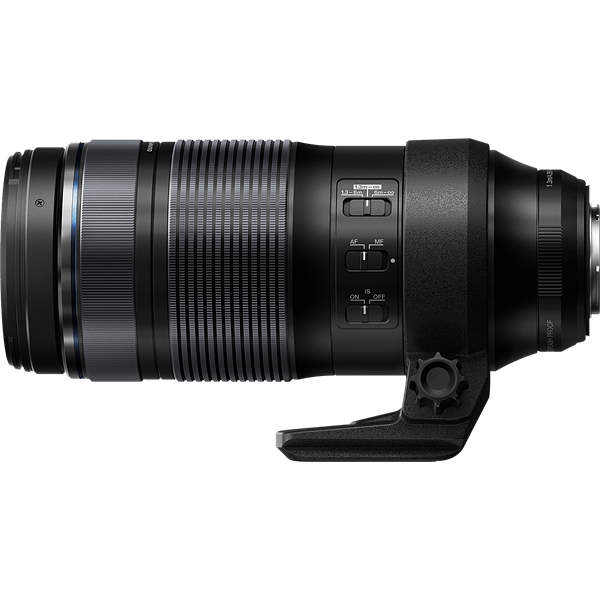
Olympus M.Zuiko Digital ED 100-400mm f/5-6.3 IS
200–800mm equiv · 1120g · OIS · Weather sealed
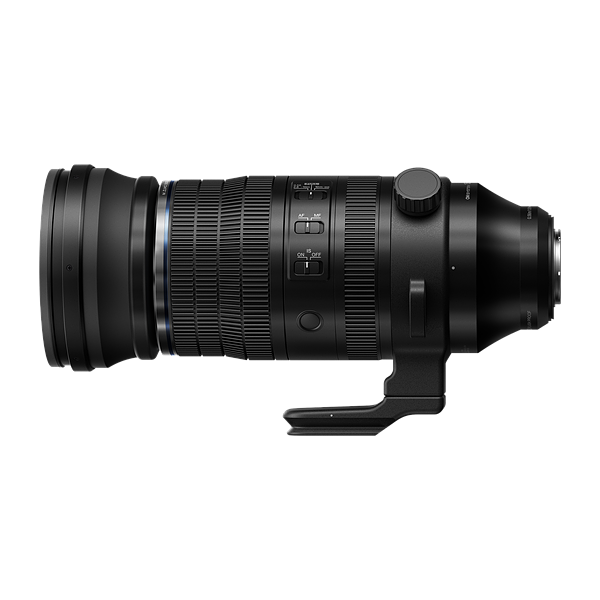
Olympus M.Zuiko Digital ED 150-600mm f/5-6.3 IS
300–1200mm equiv · 2050g · OIS · Weather sealed
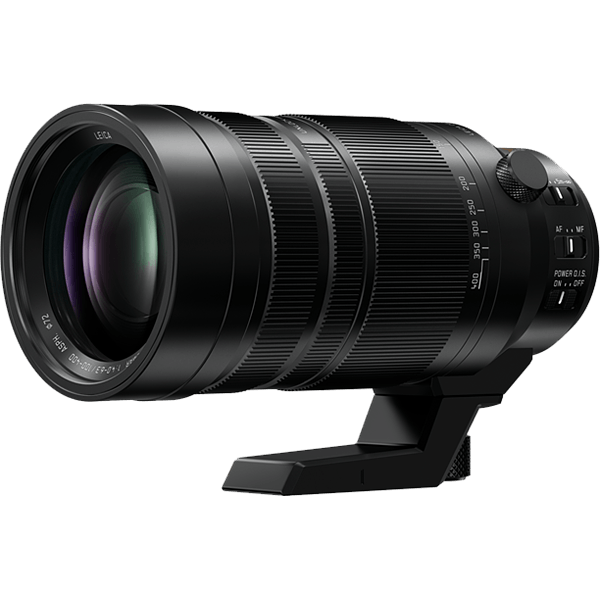
Panasonic Leica DG Vario-Elmar 100-400mm f/4-6.3 II
200–800mm equiv · 985g · OIS · Weather sealed