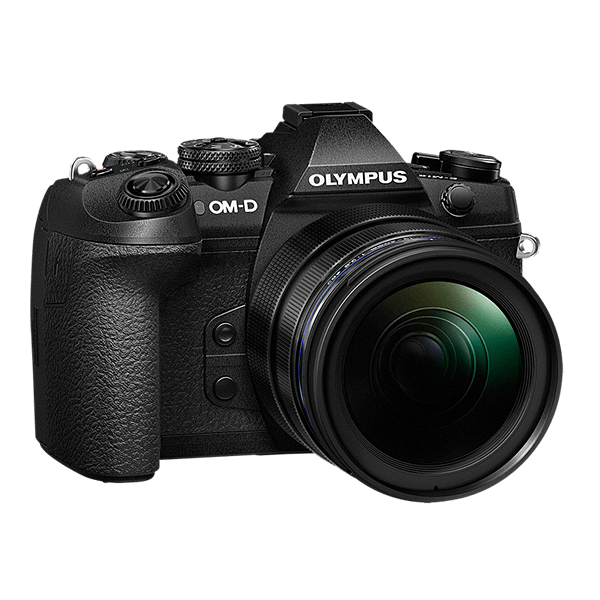
The Olympus OM-D E-M1 II is an Olympus Micro Four Thirds camera released in 2016, built around an 20.4MP Live MOS sensor. Key features include 5.5-stop IBIS, phase-detection AF, 4K video, and weather sealing. This model has been discontinued. It replaces the Olympus OM-D E-M1. It has been succeeded by the Olympus OM-D E-M1 III. At 574g, this is 36g above the M43 average of 538g, noticeable but within the expected range for a body with this feature set. The Panasonic Lumix G97 is 55g lighter if that matters.
Best for: Travel and outdoor photography
Pros
- 5.5-stop IBIS for handheld stability
- Phase-detect AF for reliable subject tracking
- Weather sealed body
Cons
- No subject recognition AF
- 4K capped at 30fps
Wildlife and outdoor photography
The E-M1 II introduced phase-detect AF to the Olympus E-M1 line and brought IP53 sealing, 18fps burst, and 7.5-stop IBIS. It was the benchmark M43 wildlife body of its era and remains capable for general wildlife and outdoor use. Full guide →
Travel photography
IP53 sealing, strong IBIS, and a mid-size body make the E-M1 II a practical travel camera. It is a generation behind the current OM System bodies but the core capabilities hold up for travel photography. Full guide →
Specifications
| Body | |
| Brand | Olympus |
| Status | discontinued |
| Released | 2016-09 |
| Weight | 574g |
| Dimensions | 134.1 × 90.9 × 68.9mm |
| Body material | Magnesium alloy |
| Weather sealed | Yes |
| Screen | Tilting |
| Screen size | 3" |
| Screen resolution | 1037k dots |
| Touchscreen | Yes |
| Sensor | |
| Description | 20.4MP Live MOS |
| Megapixels | 20.4MP |
| Resolution | 5184 × 3888 |
| ISO range (native) | 64–25600 |
| High-res mode | 50MP |
| Viewfinder | |
| EVF | Yes |
| EVF resolution | 2,360,000 dots |
| EVF magnification | 1.48x |
| Stabilisation | |
| IBIS | Yes |
| IBIS stops | 5.5 stops |
| Dual IS | No |
| Autofocus | |
| Phase detect | Yes |
| Subject recognition | No |
| AF points | 121 |
| Shooting | |
| Max mechanical shutter | 1/8000 |
| Max electronic shutter | 1/32000 |
| Burst (mechanical) | 18 fps |
| Burst (electronic) | 60 fps |
| Battery life (CIPA) | 440 shots |
| Video | |
| 4K | Yes |
| 4K 60fps | No |
| Log | No |
| Max video bitrate | 77 Mbps |
| Ports & storage | |
| Card slots | 2 |
| Card type | SD UHS-II + SD UHS-II |
| HDMI | micro |
| USB | USB 3.0 micro-B |
| Headphone jack | Yes |
| Mic port | Yes |
| WiFi | Yes |
| Bluetooth | No |
| GPS | No |
| NFC | No |
| Battery | BLH-1 |
| Pricing | |
| Price (approx.) | N/A |
Frequently asked questions
Does the Olympus OM-D E-M1 II have IBIS?
Yes. The Olympus OM-D E-M1 II has in-body image stabilisation rated at 5.5 stops.
Is the Olympus OM-D E-M1 II weather sealed?
Yes. The Olympus OM-D E-M1 II is weather sealed, which means it is protected against dust and splashing water.
Does the Olympus OM-D E-M1 II shoot 4K video?
Yes. The Olympus OM-D E-M1 II records 4K video at up to 30fps.
Does the Olympus OM-D E-M1 II have phase-detect autofocus?
Yes. The Olympus OM-D E-M1 II uses phase-detect autofocus.
What card does the Olympus OM-D E-M1 II use?
The Olympus OM-D E-M1 II has 2 card slots and accepts SD UHS-II + SD UHS-II cards.
How much does the Olympus OM-D E-M1 II weigh?
The Olympus OM-D E-M1 II weighs 574g (body only, with battery and card).
Is the Olympus OM-D E-M1 II still worth buying?
The Olympus OM-D E-M1 II has been succeeded by the Olympus OM-D E-M1 III. The newer model improves on AF performance, sensor, and video specs. At a reduced second-hand price the Olympus OM-D E-M1 II remains a capable body, but the Olympus OM-D E-M1 III is the better long-term buy if the budget allows.